Introduction
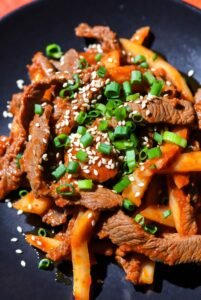
There’s something undeniably enticing about a sizzling plate of Spicy Korean Beef Bulgogi. Picture this: tender strips of marinated beef, seared to perfection, basking in a rich, sweet, and spicy sauce. It’s an explosion of flavors that dances on your palate, with hints of garlic and a touch of sesame rounding out each bite.
As the sweet aroma wafts through your kitchen, you’ll find yourself captivated by the musical sizzle of the beef hitting the hot pan. Whether you’re serving it over steamed rice or wrapped in crisp lettuce, this dish demands to be enjoyed today. Embrace the vibrant flavors and the comforting warmth of homemade Spicy Korean Beef Bulgogi—it’s more than just food; it’s a culinary experience.
Ingredients
- 1 lb ribeye steak, thinly sliced
Ribeye is rich and juicy, providing the perfect texture and flavor for bulgogi. If you prefer leaner meat, flank steak is a suitable substitute. - 1/4 cup soy sauce
This adds a salty umami depth to the dish. For a gluten-free option, use tamari. - 2 tablespoons brown sugar
Brown sugar adds a lovely sweetness that balances the heat. You can swap it for honey if desired. - 1 tablespoon sesame oil
Sesame oil contributes a nutty aroma and flavor, enhancing the overall profile. You can use vegetable oil if needed. - 4 cloves garlic, minced
Garlic brings a robust, aromatic quality to the marinade that penetrates the beef beautifully. - 1-inch piece ginger, grated
Ginger adds a warming spice which brightens the overall flavor. You could also use ground ginger in a pinch. - 1-2 teaspoons gochujang (Korean chili paste)
This amazing ingredient delivers the signature spice that makes bulgogi stand out. Adjust to your heat preference. - 2 green onions, chopped
These provide a fresh crunch and color as a garnish, complementing the rich beef. - Lettuce leaves, for serving
Lettuce wraps are a classic, offering a refreshing bite to the spicy meat. You can use romaine or butter lettuce.
Directions & Preparation
Step 1: Prepare the marinade by whisking together soy sauce, brown sugar, sesame oil, garlic, ginger, and gochujang in a bowl.
Ensure the sugar dissolves completely while mixing these ingredients, creating a thick, viscous sauce that clings to the beef. The mingling scents of soy, garlic, and ginger create an enticing aroma, hinting at the deliciousness to come.
Step 2: Add the thinly sliced ribeye to the marinade, tossing to coat. Cover and refrigerate for at least 30 minutes, preferably 2 hours.
Marinating allows the flavors to seep into the meat, leading to tender and flavorful pieces. As it marinates, the meat absorbs the blend of sweet, spicy, and savory elements, transforming it into something truly special.
Step 3: Heat a large skillet or grill pan over medium-high heat until hot. Add a tablespoon of oil.
As the oil shimmers and begins to smoke slightly, it’s the perfect time to add the marinated beef. Listen for the sizzle as the meat touches the pan; that sound means you’re about to elevate your dinner!
Step 4: Add half the beef to the skillet, ensuring not to overcrowd the pan. Sear for about 2-3 minutes per side until browned.
Watch as the edges caramelize beautifully, intensifying the sweet and spicy notes. The highly sought-after char brings a depth to the dish that will have everyone swooning.
Step 5: Remove the first batch and repeat with the remaining beef, adding more oil if necessary.
As each batch cooks to perfection, the aroma fills your kitchen, creating an anticipatory hum. The color of the beef deepens, teasing the tastebuds further, making it hard to resist tasting before completing the dish.
Step 6: Sprinkle chopped green onions over the beef before plating.
The vibrant green adds a fresh burst that brightens the dish. Visually, it transforms your creation into a feast, promising delight at first glance.
Step 7: Serve the bulgogi hot, accompanied by lettuce leaves for wrapping and a side of rice if desired.
Build your perfect bite by wrapping the sizzling beef in crisp lettuce and drizzling with additional gochujang for an extra kick. Each bite melds the crispy lettuce with rich, spiced beef—a blissful combination.
The Art of Marinating: Transforming Tough Cuts into Tender Delights
Marinating is more than just adding flavor; it fundamentally alters protein structure. As the beef sits in the marinade, enzymes start breaking down protein fibers, leading to a tender, juicy final product. This process also allows the spices to infiltrate the meat, ensuring every bite bursts with flavor, elevating your bulgogi from good to phenomenal.
Why Heat Matters: The Secret to Perfectly Seared Bulgogi
Achieving that critical sear takes the right temperature and timing. A fiercely hot skillet caramelizes the sugars in the marinade, producing a tantalizing crust while sealing in juices. This contrast of textures—crisp outside and tender inside—not only creates an unforgettable mouthfeel but also enhances the overall flavor profile, creating an irresistible dish.
Serving Suggestions: Beyond the Traditional Plate
While Spicy Korean Beef Bulgogi stands boldly on its own, exploring various serving options enhances your culinary adventure. Pairing with vibrant kimchi or a refreshing cucumber salad adds layers of texture and flavor. Serving it with steamed rice ensures a comforting base, while lettuce wraps offer a crisp, healthy alternative that lets you enjoy every bite guilt-free.
FAQs
How can I adjust the spice level of the bulgogi?
You can control the spiciness by varying the amount of gochujang. Use less for a milder flavor or add more to crank up the heat.
Can I use a different cut of beef for this recipe?
While ribeye is ideal, you can also use flank steak or sirloin for a leaner option. Just ensure the beef is sliced thinly for best results.
What if my beef isn’t browning properly?
Ensure your pan is hot enough and not overcrowded. Low heat leads to steaming instead of browning, so work in smaller batches.
Can I make bulgogi using chicken or tofu instead?
Absolutely! Simply adjust the marinating time—chicken will need about 30 minutes, while tofu can absorb flavors overnight for extra depth.
What side dishes pair well with bulgogi?
Consider serving with steamed rice, kimchi, or a fresh cucumber salad, which provides brightness to balance the richness of the beef.
How can I make bulgogi a little more healthy?
Use lean cuts of beef, reduce the sugar in the marinade, and serve over a generous portion of sautéed vegetables instead of rice.
Conclusion
Cooking this Spicy Korean Beef Bulgogi isn’t just about feeding your body; it’s about nurturing your soul. With each bite, the blend of sweet, savory, and spicy flavors will ignite your passion for home-cooked meals. You’ll find joy not only in the cooking but in sharing this dish with loved ones.
So, gather your ingredients and let your kitchen come alive with the vibrant aromas of bulgogi. Trust me, you’ll be glad you did; this is more than just a meal—it’s an invitation to savor life’s simple pleasures.
Notes
Additional serving suggestions: pair with a crisp salad, garlic bread, or roasted seasonal vegetables for balance.
For make-ahead, prep components separately and assemble just before heating to preserve texture.
Taste and adjust with acid (lemon/vinegar) and salt right at the end to wake up flavors.
